Search This Blog

Friday, August 16, 2013

Foliage Follow-Up, August 16, 2013

Welcome to my Foliage Follow-Up post, to see more foliage click on the link to hostess Pam's Digging.

Something silver- Santolina-

Something yellow- Jasminum officinale 'Aureum'-

Something supposedly variegated, Lunaria annua 'Variegated White'-


Something edible- Cutting Celery-

Thanks for visiting, Hannah (click on the link above for Digging)

Thursday, August 15, 2013

Garden Blogger's Bloom Day August 15, 2013

Welcome to What's Blooming Now, for other posts click on this link for hostess Carol's May Dreams Gardens.  A few roses are still blooming, like Red Ribbons-


Apricot Nectar-

Marie Pavie-

Sweet Chariot mini-

Queen of my roses, Zephirine Drouhin-


My 10 year old Phlox paniculata, which the deer don't bother-

It has done so well that I bought more Phlox this year, Purple Paradise-

and Coral Flame-

Yarrow 'Cassis' and Hardy Geranium 'Rozanne'

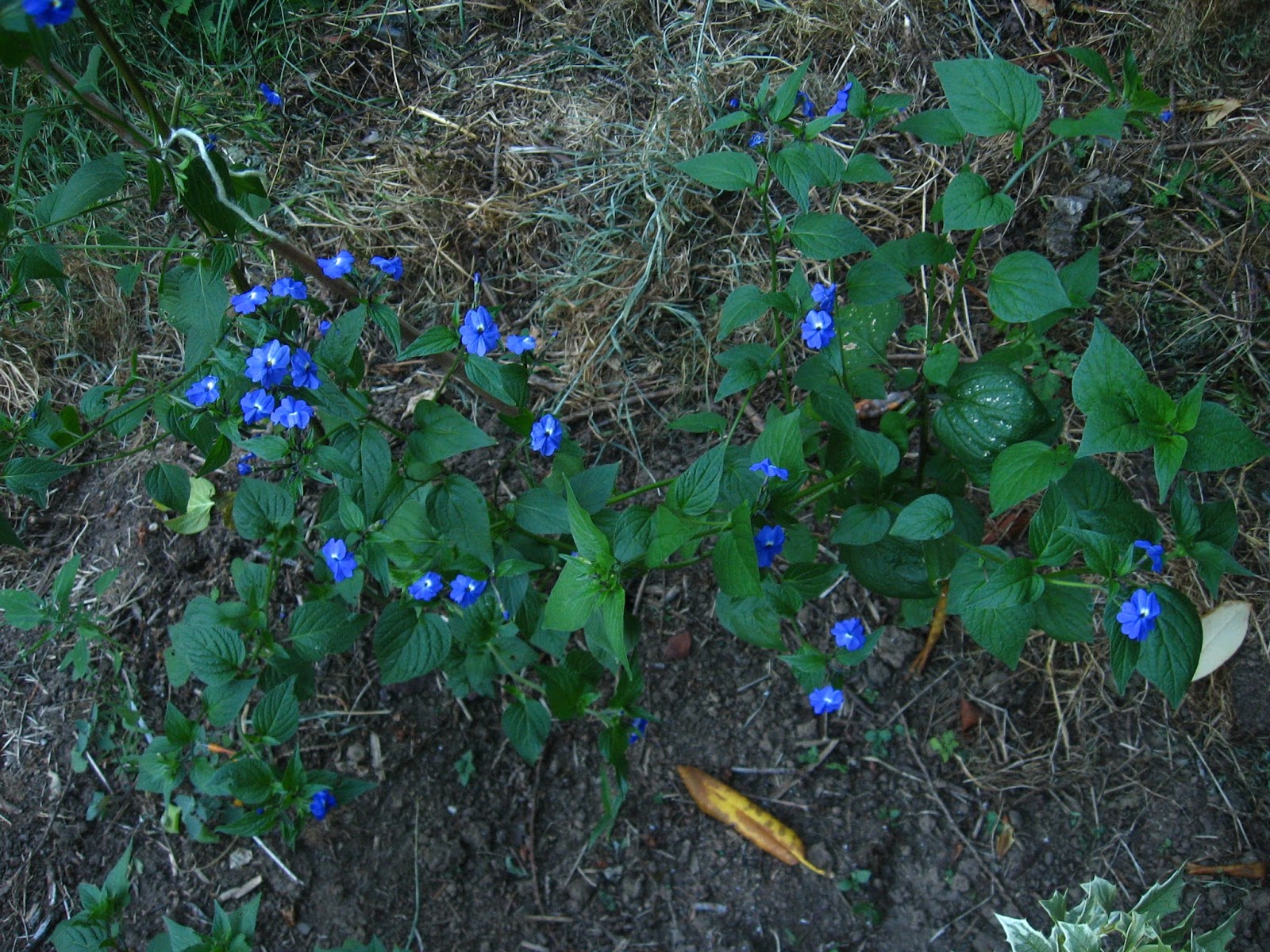
Annual Browallia has amazed me with it's blooms and bushy habit, a real keeper-


Agastache rugosa has a lot of presence in the garden at 4 feet or more-


Oregano makes delightful dense clumps and thrives in poor dry soils and on our ramp.

Anemone japonica and tomentosa are beginning to bloom,  Platycodon 'Hakone Double' bloomed for the first time, Echinaceas, Gladioli, Honeysuckle, Rose of Sharon, Musk Mallow, Nasturtiums, Larkspur, Liatris, ever-blooming Daphne 'Summer Ice', a few straggling Clematis, mints, Crocosmia (Montbretia), and Fireweed are also blooming.

I hope you are having a great summer,  Hannah


Monday, August 12, 2013

Blue Macro Mandarin Orange Mellow Yellow Monday, August 12, 2013

Happy Blue Monday, Macro Monday 2, I Heart Macro, Monday Mellow Yellows, and Mandarin Orange Monday!   Click on the links to see other Blogs on these themes from around the world, and thanks to the hosts.

I'm still featuring some quilts (not mine) from the local county fair-
this is just the center-
 this is just the center-
this is a corner-

Now for some blue too-

And one dragonfly detail-

For macros I've got the Borage family blues, Anchusa azurea-
Borage, loved by bees, edible flowers can be eaten in salads, leaves used for cooling drinks blended and strained-

More edible flowers, larger and with a piquant peppery flavor, Nasturiums, delightful in salads-

Summertime, and the living is easy....

or cameras are macro

-Hannah

Smiling Sally


Shine the Divine


I checked the Blue Monday site and did find a link that worked, instead of the logo I dragged into my picture files, but can't guarantee the logos above are actual links, so please click on the links at the beginning of the post, thanks, Hannah


Monday, August 5, 2013

Mandarin Orange Monday and Macro Monday 2, August 5, 2013

Welcome to my Mandarin Orange Monday post, linked with Macro Monday 2.

I'm featuring another quilt, I posted one for Blue Monday as well.  I like the sunbursts, and also that they are randomly arranged, I find them intriguingly dynamic.

And of course some gratuitous flower photos Echinacea getting started-

And going stellar-

Crocosmia 'Mont Bretia' clump-

Or cameras are macro.


  -Hannah

Blue Monday, August 5, 2013

Welcome to my Blue Monday post, to see other Blue Mondays from around the world click on the link to Smiling Sally's blog.

A fantastic quilt from a county fair, I posted another one for Macro Monday 2 and Mandarin Orange Monday here-


Blue Larkspurs-

Thanks for visiting, Happy Blue Monday!

-Hannah

Monday, July 29, 2013

Blue Monday, Macro Monday, I Heart Macro, Favorite Plant Picks

Welcome to my Blue Monday post, to see other Blue Monday photos, hosted by Smiling Sally, from around the world, click on the link.   I'm also linking with Macro Monday 2.  And I Heart Macros.

What could be more blue than some nice ripe Blueberries?


I'm also selecting blueberries as my favorite plant of the week, in the edible realm.   I can enjoy looking at plants and flowers, but they don't taste great and sustain life.

In the realm of flowers, for favorite plant of the week I would have to go with my new annual plant experiment, Browallia, which are going on to make nice bushy plants covered with flowers just like the people claim, the number of blossoms increasing almost exponentially from the first blooms just on the tips of the plants.   Note the cute heart-shaped leaves.


I'm also linking up this post with Loree's Danger Garden for Favorite Plant of the Week.

Smiling Sally


Shine the Divine


-Hannah

Wednesday, July 24, 2013

Wildflower Wednesday, July 2013

Welcome to my Wildflower Wednesday post, hosted by Gail at Clay and Limestone, who is featuring Cup Plant this month.  One of the many assertive natives in my yard is Thimbleberry, Rubus parviflorus, which is found from Alaska to California and east to the Dakotas and New Mexico-

It is useful in that it has an edible berry, but the bush can get 5-6' tall, and doesn't have a very big crop of berries per plant.  It would not be a very high-yielding plant to grow as a food crop.   It spreads rapidly by underground suckers, rather like raspberries, and after taking over a large area can get really disgusting by flopping all over.  I made the mistake of trying to eliminate Thimbleberries from an area and plant raspberries there instead, but after a few years the Thimbleberries managed to overrun the poor raspberries, and the area was enclosed in a deer fence, which made it very hard to deal with the tangle of plants.  So while the fruit is tasty, it is something I tolerate or rather can't quite control, so is not very suitable to a city lot. The fruits come loose from the receptacle in the shape of a cup, hence the name Thimbleberry.

I would rank it far behind other native berries in my yard, like Salal and Oregon Holly Grape, in nutritional content and the attractiveness and desirability as a landscaping plant, though the fruits are pleasant raw, whereas Salal and Oregon Holly Grape would be better cooked and perhaps mixed with other fruit to moderate the strong taste, similar to Black Currant or Aronia, which fruits also have a high antioxidant value.  It is very persistent and hard to eliminate once it has roots and runners in the ground.   On the other hand, it will grow in difficult situations like on dry banks.  Indian tribes used the leaves dried and powdered or made into a decoction or poultice for various health problems.  Native American Plants by Daniel Moerman is a good reference for how Indians used various native plants for medicine and food.


Too much of a good thing.   -Hannah